





Ecommerce Marketing
The Rise of Smart Bots in Ecommerce and Adobe Commerce Performance
Mahaveer Devabalan|Dec 11, 2025|Read 7 Min


Online shopping has become a global phenomenon, providing shoppers with the convenience of purchasing products from anywhere in the world. However, there is another side to this digital retail industry, as some websites and platforms use deceptive techniques known as dark patterns to manipulate users into taking actions or making decisions that are not in their best interests.
Author of Dark Patterns, Harry Brignull, describes a dark pattern as:
“A user interface carefully crafted to trick users into doing things they might not otherwise do.”
Some examples of dark patterns include “bait and switch,” where a product or service is often displayed at a low price but replaced with a more expensive one at checkout.
“Disguised ads” slip in promotional content with regular content. Users tend to find it difficult to distinguish between the two.
“Forced continuity” involves automatically enrolling users into subscription services after a free trial without any notification, knowledge, or consent, often leading to unexpected charges.
“Hidden costs” is another dark pattern where websites or apps sneakily add additional charges during the purchasing process making it hard for users to know the actual price upfront.
“Misleading Visuals” directs user attention to influence decision-making, such as using prominent buttons or misleading graphics.
Additionally, “nudging” techniques use subtle cues to influence user behavior, such as strategically placing a prominent “buy now” button.
From a business perspective, websites that include dark patterns in design mainly aim at the quickest conversions for products.
And that leads us to think..
Some dark patterns rely on the fact that the user is in a rush to make the purchase therefore it is easier to sway their decision. They rely on the fact that the user isn’t paying attention to detail.
Here’s an example:
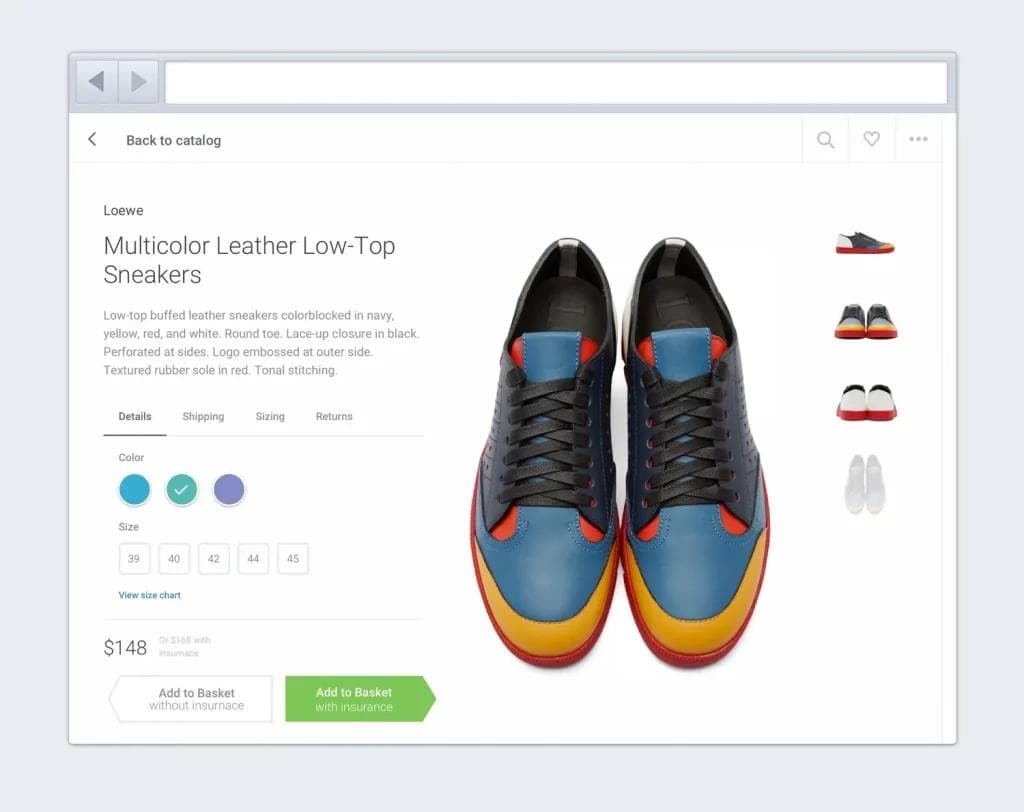
In this example, there’s a big green button that automatically adds insurance, and the arrow shape next to it suggests that clicking it is how you proceed. If you’re not paying close attention, you might miss that it’s tricking you into adding insurance without your explicit consent.
Then there are some websites that use psychology techniques to influence the buyer’s decision. This is where the human subconscious comes into play.
This brings us to emotional resonance.
Emotional resonance is the ability of a website to trigger an emotional response in the visitor. Emotional resonance can be used to make dark patterns more effective. For example, an ecommerce website may employ high-end and luxurious imagery, which can lead users to overlook dark patterns and be more inclined to make a purchase.
This happens when the visuals appeal to the limbic system of the brain. The limbic system is a part of the brain that is responsible for emotions, motivation, and memory. It is also involved in decision-making. Dark patterns are designed to exploit the limbic system by triggering emotional responses that can lead to users making decisions that are not in their best interests.
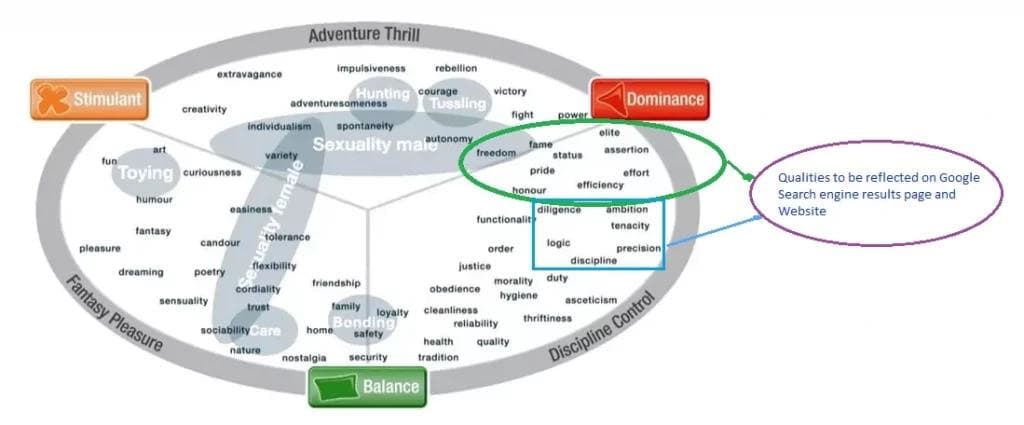
Some examples of how emotional resonance can be used to create dark patterns include scarcity, fear, gratitude, trust, etc.
Websites often employ emotional resonance techniques to tap into various subconscious factors that influence people’s decisions. Here’s how they do so..
Fear of Missing Out (FOMO): They create anxiety by suggesting limited-time offers, making users worried they’ll miss out on a good deal.
Urgency: By pressuring users to act quickly, dark patterns push them to make impulsive decisions.
Scarcity: They exploit the perception of limited availability, making users believe certain products are exclusive, prompting them to take action.
Trust: Dark patterns deceive users by presenting websites as trustworthy or
luxury- oriented, tapping into our inclination to believe in their reliability.
Colors also play an important role in dark patterns.
Dark patterns often use colors to draw attention away from important information or options, making it difficult for users to notice alternative choices. Vibrant or flashy colors may distract users from understanding the consequences of their decision. Colors are used to establish a visual hierarchy, making certain options or buttons appear more prominent and appealing, while downplaying less favorable choices. Colors are also used to create a sense of luxury that entices users in favor of making the purchase.
In recent months, these design tactics have faced increased scrutiny, with tech companies facing lawsuits, and several laws have been enforced to protect consumers from their deceptive practices.
In March 2021, California made amendments to the California Consumer Privacy Act, taking a stand against dark patterns that impeded consumers from exercising their privacy rights.
Similarly, the UK issued guidelines, which later became enforceable under the Data Protection Act, 2018. These guidelines aimed to curb companies from using manipulative tactics to entice underage users into opting for low-privacy settings.
The Indian government has also recently taken significant action to protect consumers from deceptive practices in e-commerce. The Ministry of Consumer Affairs, Food and Public Distribution has issued a ban on the use of dark patterns in online shopping platforms. This move is part of a broader effort to safeguard consumers from unfair trade practices, as outlined in the Consumer Protection Act of 2019.
Dark patterns are considered deceptive as they exploit consumers’ lack of knowledge about the digital environment, causing potential harm or financial loss. By implementing this ban, the government aims to ensure that businesses no longer use manipulative tactics to take advantage of unsuspecting consumers, creating a fairer and safer e-commerce landscape in the country.
The eCommerce industry is constantly evolving, and dark patterns are likely to remain a challenge as long as short-term conversion tactics keep tempting businesses. The businesses that move away from these tactics, toward clear pricing, honest urgency, and checkout flows customers can actually understand, are the ones that build lasting trust instead of one-time conversions.
Not sure if your checkout flow crosses into dark pattern territory? Talk to Codilar's team about auditing your store's UX for compliance and trust.
It depends on your market. California, the UK, and India have all introduced specific regulations or bans against dark patterns, so what's a gray area in one country may be a legal violation in another.
A good test: would the choice still convert if the user fully understood what they were agreeing to? If a design relies on confusion, urgency, or hidden information to work, it likely crosses into dark pattern territory.
Short-term, maybe slightly. Long-term, ethical design tends to build more trust and repeat customers, since dark patterns often lead to higher return rates, chargebacks, and reputational damage once customers notice.
Not if it's accurate. It only becomes a dark pattern when the scarcity or urgency is fabricated, like a fake countdown timer that resets, rather than reflecting real inventory or time constraints.
Walk through your checkout flow as a first-time customer and flag anything that feels rushed, unclear, or hard to undo, like pre-checked boxes, hidden fees, or a confusing cancellation process.

Get tailored technology solutions to scale your retail business online
Request A Quote

Stay ahead with insights, trends, and brand success stories from the world of Digital Commerce.


DTECH, Techno Hub 1, Dubai Silicon Oasis Authority, United Arab Emirates - Dubai - United Arab Emirates

Level 1, Building 7, Zone A Airport road, Business Gate P.O Box 93597 Riyadh 11683, KSA.


Codilar Digital Pte Ltd, 68 Circular Road, #02-01, 049422, Singapore

7th Floor, Jupiter Block Prestige Tech Park, Kadubeesanahalli, Bellandur Amtankere, Bengaluru, Karnataka 560103

Satrio Tower, Floor 6, Unit C and D, Desa/Kelurahan Kuningan Timur, Kec. Setiabudi, Kota Adm. Jakarta Selatan, Provinsi DKI Jakarta