




General
eCommerce Website Development for Pet Care Brands in the UAE
Aakash Ashok|Oct 16, 2026|Read 8 Min



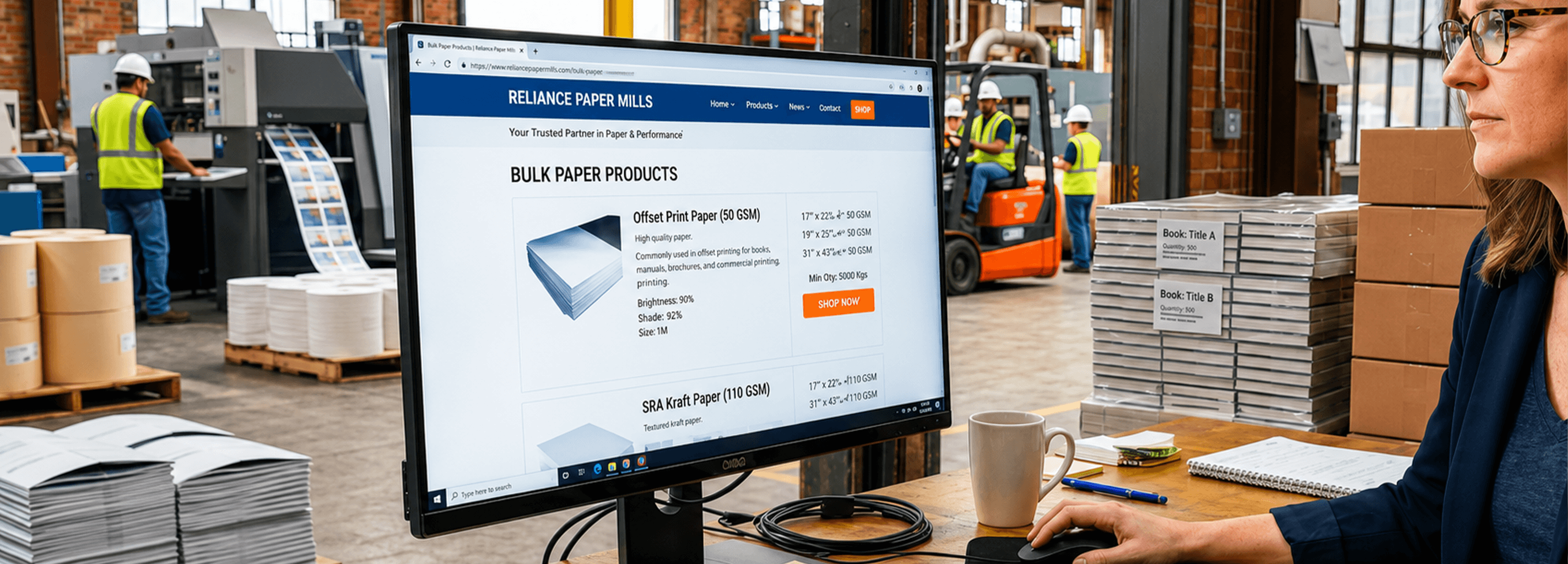
Most manufacturers who decide to go online picture the same thing, a product catalog, a checkout button, and orders rolling in. It sounds simple because every eCommerce success story makes it sound simple.
Then you start building. And within the first month, you're in a meeting explaining why a customer can't place an order at their negotiated price without calling your sales rep. Your developer is explaining why your ERP and your website are showing two different stock numbers. And finance is asking why the GST on the invoice doesn't match what the customer saw at checkout.
This is the real starting point for eCommerce website development in manufacturing, not because the technology is bad, but because manufacturing businesses carry operational logic that no off-the-shelf platform was designed to handle.
Standard eCommerce platforms were built for one price, one catalog, one checkout experience for every visitor. That's not your business.
You sell the same product to a distributor at one rate, a long-term contract buyer at another, and maybe directly to an end customer at a third. Your products have technical configurations, material grade, dimensions, tolerance levels, that change the price. Some ships from stock. Others go into production after the order is confirmed.
The eCommerce development companies that understand manufacturing know this gap and build to close it. The ones that don't hand you a website your sales team quietly ignores because it can't do what a phone call can.
Almost every manufacturer's first eCommerce project gets derailed by the same thing, pricing.
Distributors on contract rates, volume-based tiers, long-term buyers on rates agreed when raw material costs were different, when you move online, all of that has to move with you.
Most platforms are built around a single price list. Getting them to show different prices to different customers requires custom engineering, account-based rules, customer group logic, integration with whatever holds your contract data.
If this isn't solved on day one, your sales team ends up manually adjusting every order, which defeats the whole purpose of eCommerce web development.
A typical product page has a name, a photo, a price, and an add-to-cart button.
Now think about one of your products, say an industrial valve that comes in six bore sizes, four material grades, three pressure ratings, and two end connection types. Some combinations are in stock. Others are made to order. Price changes based on material and bore size together. The buyer also needs a datasheet and a compliance certificate before they can raise a PO.
You can't put that on a standard product page without significant custom work. What you actually need is a product configurator, a system where the buyer selects specifications, the platform validates the combination, calculates the correct price, checks stock or shows a lead time, and lets them order or submit a quote. That's eCommerce site development that understands manufacturing, not just retail.
An online order that someone manually re-enters into your ERP is not eCommerce. It's a fax with a better interface.
Real web development for eCommerce in manufacturing means the platform and ERP talk to each other automatically. Order placed online, it lands in your ERP without human intervention. Stock changes in the ERP, the website reflects it in real time. Customer credit limit updated, their checkout experience adjusts accordingly.
Without this, you get double data entry, stock mismatches, and a fulfillment process that's no faster than before. An eCommerce development company that only knows eCommerce and not ERP integration will leave you with a gap your operations team spends years working around.
Many manufacturers want to sell to distributors through a B2B portal and directly to end customers through a D2C storefront. Same products, different experiences, different pricing, different rules.
This is achievable, but it has to be planned from the start. The B2B side needs account pricing, bulk ordering, quote workflows, and NET payment terms. The D2C side needs a clean consumer checkout and promotional pricing. Bolt one onto the other after the fact and you end up with a platform that does both poorly.
The right approach is a shared catalog and backend with two distinct customer-facing experiences on top. JPW Industries, a global manufacturer of woodworking and metalworking machinery, built exactly this with us, Pimcore managing product data centrally, Adobe Commerce handling the commerce layer, serving different buyer types from the same foundation.
In retail, the buyer clicks add to cart and it's done. In manufacturing, especially for higher-value or customized products, the buyer needs a formal quote, submits it to their procurement team, and confirms only after approval.
If your platform doesn't support this, it can't serve a large portion of your buyers. You need an RFQ system built into the eCommerce experience, buyer configures, submits a quote request, your team issues a quote, buyer converts it to an order. All tracked in one place. Any eCommerce development company that doesn't account for this either doesn't understand manufacturing or is planning a workaround your team will deal with for years.
Thousands of SKUs. Dozens of attributes each, dimensions, certifications, compatible models, regional availability. Keeping all of it accurate across your website and distributor channels is a real operational problem.
This is where a PIM (Product Information Management) system earns its place. One source of truth for all product data. Update a specification once and it propagates everywhere automatically. Without it, you end up with spreadsheets, multiple versions, and product pages with specs that have been wrong for two years because no one knows where to fix them.
Codilar's work with clients managing 50,000 to 80,000+ SKUs consistently leads to the same architecture, Pimcore for product data governance, Adobe Commerce for transactions. It's not the cheapest setup, but it's the one that holds up when your catalog grows.
Codilar is an Adobe Commerce certified eCommerce development company with 11 years of experience, working with manufacturers and B2B businesses across the US, UAE, India, Singapore, and beyond. Our work with JPW Industries, where we built a Pimcore and Adobe Commerce architecture that unified product data, pricing, and order management across B2B and D2C channels, is a good example of what we deliver for manufacturing businesses. We bring hands-on expertise in ERP integration, PIM implementation, custom pricing engines, product configurators, and RFQ workflows. If you are evaluating eCommerce website development for your manufacturing business, we are happy to help you figure out the right architecture for your specific situation.
eCommerce for manufacturers isn't complicated in concept. What makes it hard is building something that actually reflects how your business operates, customer-specific pricing, complex product configurations, real ERP integration, quote workflows, and large technical catalogs all handled through one coherent platform.
Get that right and you don't just open a new sales channel. You reduce the load on your sales team, improve data accuracy, and give buyers the self-service experience that makes them reorder without picking up the phone.
Start by mapping your business requirements before touching any platform. For manufacturers, that means understanding your pricing model, product complexity, ERP systems, and buyer types first. From there, choose a platform that fits those requirements, Adobe Commerce for complex B2B needs, Shopify Plus for simpler D2C setups, and work with an experienced eCommerce development company like Codilar to handle integration, customization, and catalog setup.
Most manufacturers operate in B2B eCommerce, selling to distributors, wholesalers, or business buyers through account-based pricing, bulk ordering, and quote workflows. Many are also adding a D2C channel to sell directly to end customers. The most effective setups run both from a single platform with separate customer experiences on top, rather than maintaining two completely different systems.
The best eCommerce development services for manufacturers go beyond building a storefront. Look for a company that offers ERP integration, PIM implementation, custom pricing engine development, product configurator builds, and RFQ workflow setup. These are the capabilities that make a manufacturing eCommerce platform actually functional, not just visible.
Define your requirements, choose the right platform, plan your integrations, build and test, then launch. For manufacturers, the integration planning step is where most projects succeed or fail. Getting your ERP, pricing data, and product catalog connected to the eCommerce platform properly is the work that makes everything else function. Skipping or rushing that step creates operational problems that are expensive to fix after launch.
You need an eCommerce development company that has handled manufacturers before, not just retail brands. The right partner will ask about your ERP, your pricing model, and your buyer types before they ever mention a platform. Look at their past work, specifically whether they have built B2B platforms, managed large product catalogs, and delivered ERP integrations that actually held up in production. If you want a reference point for what that looks like, Codilar's case studies are worth going through.

Get tailored technology solutions to scale your retail business online
Request A Quote
Stay ahead with insights, trends, and brand success stories from the world of Digital Commerce.


