




General
eCommerce Website Development for Pet Care Brands in the UAE
Aakash Ashok|Oct 16, 2026|Read 8 Min



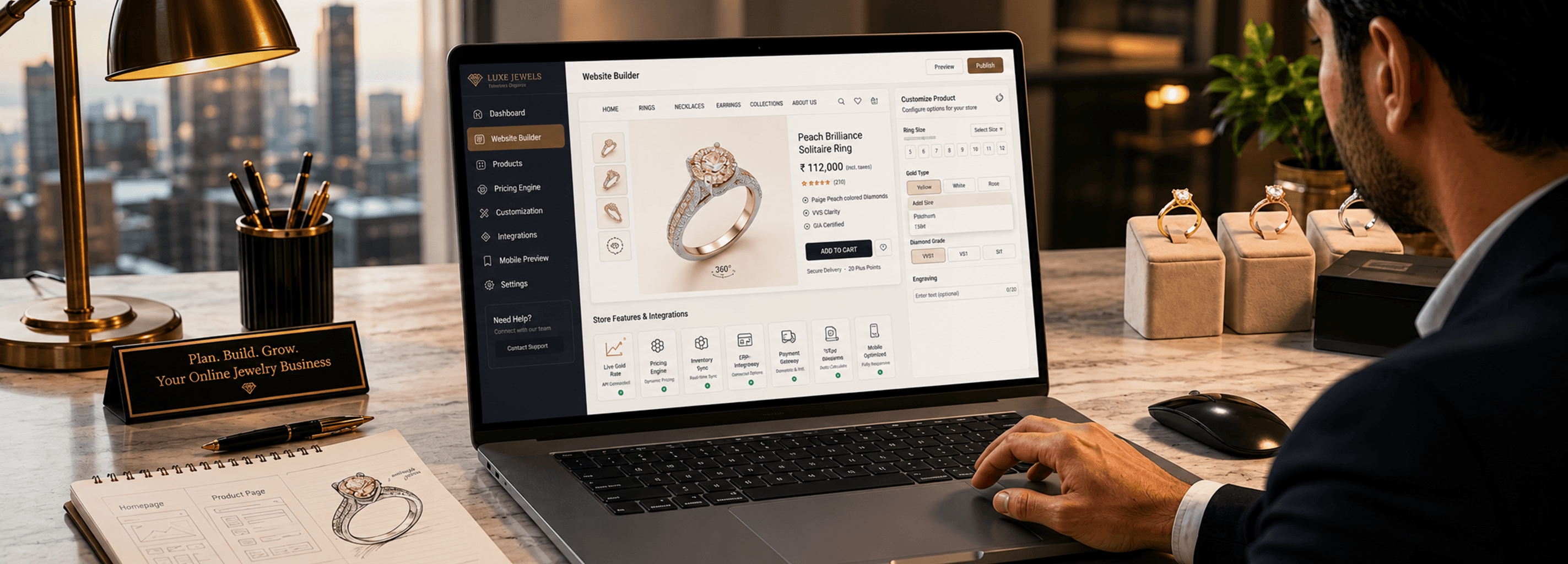
If you sell jewelry, you already know it isn't like selling t-shirts or phone cases. Gold rates change daily, every ring comes in a dozen size and metal combinations, and customers want to zoom in on a diamond before they'll trust it enough to buy. All of that shapes one very practical question for jewelry brand owners and D2C founders: how much does a jewelry eCommerce website actually cost in 2026?
There's no single number that fits every business, and any guide that hands you an exact figure without knowing your catalog, features, and platform is guessing. What we can do instead is break down the real cost drivers, show you the tiers businesses typically fall into, and explain what jewelry-specific features actually add to the equation, so you can have an informed conversation with a development partner instead of walking in blind.
Before looking at tiers, it helps to know what actually drives the number up or down. Six factors matter most:
Jewelry specifically adds cost that a typical apparel or electronics store doesn't have to think about. Live gold and diamond pricing, component-level discounting (a sale on making charges isn't the same as a sale on the whole product), and hundreds of SKU variants per design all require backend logic that a standard store template simply isn't built for. As Codilar's guide to jewelry eCommerce development points out, a single ring design can generate over 500 variants once you account for purity, color, size, and diamond grade, and pricing every one of those correctly in real time is a technical problem most generic platforms were never built to solve.
Rather than quoting exact figures, which vary widely by region, agency, and scope, it's more useful to think in terms of three broad investment tiers.
Starter tier: Suited to new jewelry brands, home-based sellers, or businesses testing the market with a smaller catalog. This typically means a premium theme with light customization, standard checkout, and basic product photography, enough to launch and validate demand. Live gold-rate pricing and ring builders are usually out of scope at this level.
Growth tier: Where most established jewelry D2C brands land. This includes custom storefront design, integrations with payment gateways and marketing tools, and often a first jewelry-specific feature like a basic ring configurator with pre-set combinations. Codilar's Shopify development services largely serve this tier, building conversion-focused storefronts with the performance and trust signals jewelry buyers expect before completing a high-value purchase.
Enterprise tier: Built for brands with large, complex catalogs, multiple locations, or ambitions to compete with established players. This is almost always built on Adobe Commerce (Magento) rather than a hosted platform, because it needs backend flexibility a hosted platform doesn't offer natively, dynamic pricing engines, centralized product tables for hundreds of SKU variants, full virtual try-on, and deep ERP/OMS integrations.
Codilar has built exactly this kind of system for major jewelry retailers, including Candere by Kalyan Jewellers, where a redesigned Adobe Commerce architecture doubled average session time. That work, along with projects for Joyalukkas and Malabar Gold & Diamonds, is what shaped Codilar's approach to jewelry ecommerce more broadly.
"Jewelry eCommerce is one of the few verticals where the backend has to work as hard as the storefront. If your pricing engine can't keep up with the gold rate, nothing else about the site matters, the customer won't trust the number on the screen." ❞

Mahaveer Devabalan | Co-founder & Head of eCommerce Solutions, Codilar
15+ Years of Experience
A few features consistently push jewelry eCommerce budgets higher than a standard store, regardless of which platform or tier you choose:
There's no universally "best platform to sell jewelry online". It depends on your catalog size and growth stage.
Choose Shopify (or Shopify Plus) if:
Choose Adobe Commerce (Magento) if:
For brands scaling on Shopify or Adobe Commerce, Codilar's Shopify Plus and Adobe Commerce experts focus on exactly this kind of growth-stage complexity, without the overhead of a full platform migration before it's actually needed. And if you do outgrow your current platform, migration doesn't have to mean starting from zero or losing your search rankings in the process. Codilar handles migrations from any platform, including WooCommerce, BigCommerce, or a legacy custom build, to Shopify or Adobe Commerce, with SEO preservation (redirects, metadata, internal links) built into the process rather than treated as an afterthought.
There's also a third path worth knowing about: instead of building jewelry-specific logic from scratch on a general platform, some brands start on a platform already built for jewelry. Hyza, Codilar's jewelry eCommerce solution, is built on Magento specifically to handle the mechanics covered in this guide, live gold rate management, dynamic weight configuration, engrave management, and price breakup display, without needing custom development for each one.
Hyza is structured in tiers based on catalog size and feature depth, which maps naturally onto the investment tiers above:
Because these features are already built rather than custom-developed, brands using Hyza often reach launch faster than a fully custom build would allow, particularly for the growth-tier features covered earlier in this guide. Pricing is quote-based depending on plan and scope. You can get in touch with our Hyza team at Codilar for a plan that matches your catalog size.
Beyond the initial build, a few recurring costs catch jewelry brands off guard:
"How much does a jewelry eCommerce website cost" doesn't have a one-line answer, and it shouldn't. What matters more than a number is choosing a platform and partner that fits your catalog today and won't need to be rebuilt the moment your business outgrows it. Whether that means a custom Shopify build, a full Adobe Commerce platform, or a jewelry-specific solution like Hyza depends entirely on where your business is and where it's headed.
Thinking through your own jewelry eCommerce build? Get in touch with Codilar's commerce team to talk through what your catalog actually needs before you commit to a budget.
Shopify suits smaller to mid-size catalogs and faster launches. Magento (Adobe Commerce) suits large catalogs that need live gold rate pricing and deep integrations. Most jewelry brands start on Shopify and move to Magento once complexity grows.
You need a dynamic pricing engine that pulls live gold or diamond rates, adds making charges and tax, and recalculates prices automatically. Standard platforms do not support this natively. It requires a custom app or a jewelry-specific platform like Hyza that has this built in.
Yes, if SEO is planned into the migration from the start. This means preserving URLs or setting up proper redirects, carrying over metadata, and rebuilding internal links. Skipping this step is what causes traffic drops after migration.
High-resolution zoom photography and a 360-degree view are essential from day one. A ring builder matters once you sell customizable pieces. AR try-on is a growth-stage feature that reduces returns but is not required at launch.
Do not create a separate SKU for every variation. Use centralized product models that reference shared metal and stone price tables instead. This keeps pricing accurate and the catalog fast, even with hundreds of combinations per design.
Beyond the website itself, factor in initial inventory or sample stock, product photography, a business license, and early marketing spend. These costs vary significantly by region and scale, so it's worth budgeting them alongside your website investment rather than treating the site as the only cost.
General eCommerce websites span a wide range, from simple template-based stores for small businesses to fully custom enterprise builds. Jewelry-specific features (dynamic pricing, configurators, high-end imagery) tend to push costs toward the higher end of whatever range a given platform or agency quotes.

Get tailored technology solutions to scale your retail business online
Request A Quote

Stay ahead with insights, trends, and brand success stories from the world of Digital Commerce.


